
Spring rain can expose weak points in a home quickly, and water damage in Orange County, CA is not always obvious right away. A small roof leak, window seepage, slab leak, or damp wall cavity can quietly spread moisture into materials that should stay dry. Jarvis Restoration helps homeowners identify and address hidden water issues before they turn into larger repairs, mold growth, or structural concerns during peak moisture season.
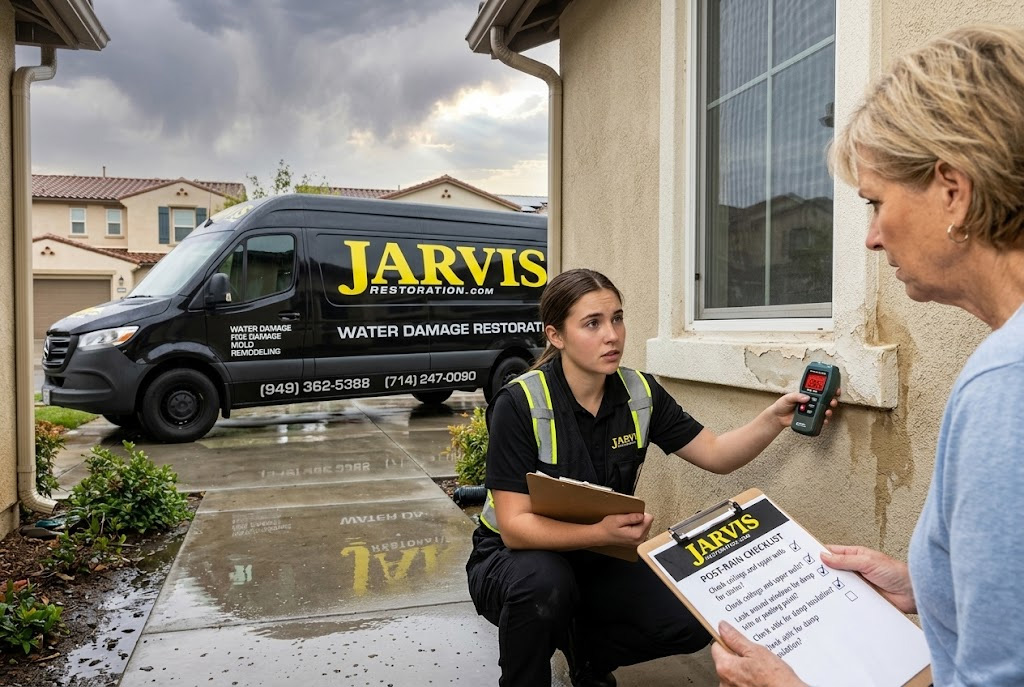
Why Spring Moisture Can Be So Problematic
Homeowners often overlook water damage after rain if flooding isn’t obvious. However, moisture frequently accumulates behind walls, under flooring, or within ceilings. It can travel through framing, insulation, and concrete before visible signs emerge.
Orange County properties face risks from wind-driven rain, roof wear, and drainage gaps. Trapped water weakens materials and fosters mold growth. Early professional inspections after spring storms are essential to prevent structural damage.
Hidden Water Damage Signs Homeowners Often Miss
Some water damage is easy to spot, but many warning signs are subtle. Homeowners should pay close attention to changes that appear after rainfall, even if they seem minor at first.
Watch for:
- Brown or yellow stains on ceilings or upper walls
- Bubbling, peeling, or soft drywall
- Swollen baseboards, door frames, or window trim
- Musty odors in bedrooms, closets, bathrooms, or hallways
- Damp carpet edges or warped flooring
- Paint that looks blistered or discolored
- Condensation or staining around window frames
- New cracks near walls, flooring, or slab areas
- Mold spots near vents, corners, or behind furniture
- Unexplained increases in indoor humidity
Why Mold Risk Increases After Rain
Mold does not need a major flood to become a problem. It needs moisture, organic material, and time. Drywall, wood, dust, carpet backing, and insulation can all support mold growth when damp conditions persist. After spring rain, trapped moisture behind walls or under floors may go unnoticed long enough for mold to spread.
A professional water damage restoration team can use moisture detection equipment to locate damp areas that are not visible from the surface. Jarvis Restoration can help homeowners understand the extent of the issue, remove damaged materials as needed, properly dry affected spaces, and reduce the risk of recurring moisture problems.
Preventive Checklist After Spring Rain
Homeowners can reduce the risk of water damage by checking vulnerable areas soon after storms. A quick inspection can reveal early warning signs before damage spreads.
Use this checklist after heavy rain:
- Check ceilings and upper walls for new stains
- Look around windows for damp trim or peeling paint
- Inspect under sinks and around plumbing fixtures
- Walk around flooring to feel for soft or warped spots
- Smell closets, cabinets, and closed rooms for musty odors
- Clear gutters and confirm downspouts move water away
- Check attic areas for damp insulation or roof staining
- Look outside for pooling near the foundation
- Monitor water bills for unexplained changes
- Call a restoration professional if anything feels damp, stained, or suspicious
Call Jarvis Restoration Before Moisture Spreads
Spring moisture can move fast, and waiting too long can make water damage more expensive and disruptive. If your home has signs of hidden moisture after spring rain, schedule an inspection with Jarvis Restoration. Early action can protect your home, limit damage, and give you a clearer path forward before the next storm arrives.
For comprehensive home restoration services you can rely on, contact Jarvis Restoration today!