
Summer heat in Orange County, CA can create more than comfort concerns. As temperatures rise and cooling systems run longer, hidden moisture problems can develop in places homeowners rarely check. HVAC condensation, poor attic ventilation, crawlspace humidity, and pipe expansion can all contribute to water damage risks if they are ignored. Jarvis Restoration helps homeowners take a proactive approach to seasonal maintenance, moisture detection, and restoration concerns before small problems become expensive damage.
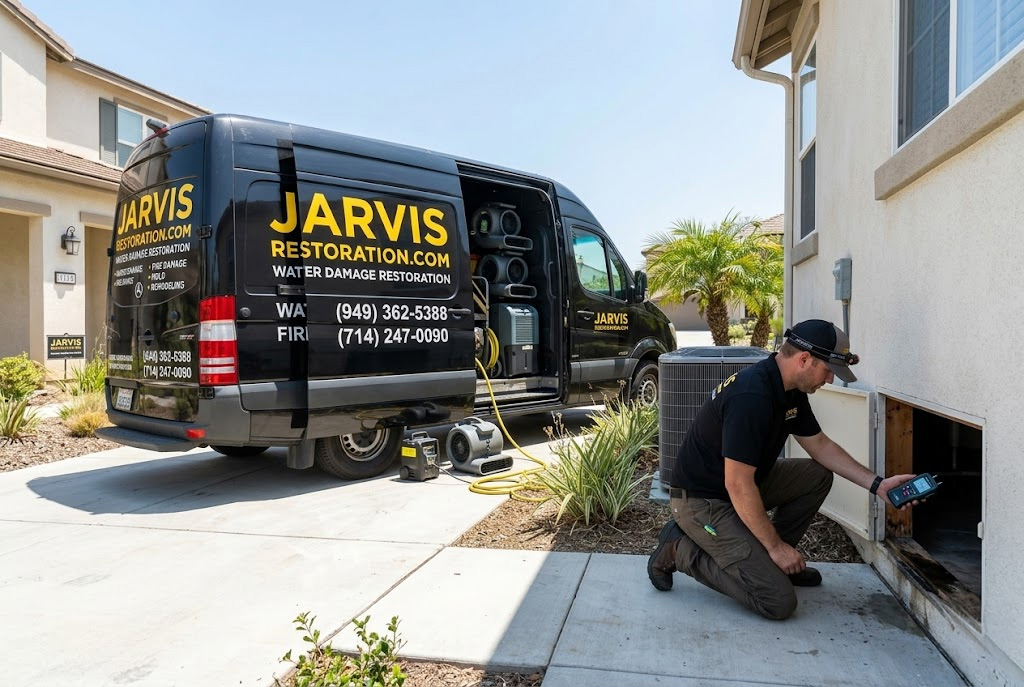
How Summer Heat Can Create Moisture Trouble
Higher cooling demands during warm weather cause HVAC systems to produce more condensation. If the drain line fails due to clogs or cracks, water can leak into walls, ceilings, or floors, causing stains, odors, and mold.
Homeowners should check for moisture around air handlers and vents. Damp spots or mildew odors may indicate drainage issues. Professional inspections help determine if leaks stem from the HVAC system or other hidden sources.
Why Attic Ventilation Matters
Summer heat can trap intense warmth in poorly ventilated attics, impacting roofing, insulation, and moisture levels. Trapped humidity often leads to mold growth or wood decay. Signs of trouble include musty smells, stained wood, damp insulation, or ceiling discoloration. Homeowners should address unusually warm or humid rooms, as these suggest airflow or moisture issues. Jarvis Restoration evaluates damage to insulation, drywall, and structural components to help prevent further deterioration.
Crawlspace Humidity and Hidden Damage
Crawlspaces are easy to overlook, but they can become a major moisture source during hot, humid weather. Moist air can collect under the home, especially if drainage is poor, ventilation is inadequate, or plumbing leaks go unnoticed. Over time, crawlspace humidity can affect wood framing, flooring, insulation, and indoor air quality.
Warning signs may include musty smells, soft flooring, visible mold, pest activity, condensation, or high indoor humidity. Because crawlspaces are not part of a homeowner’s daily routine, moisture problems can remain hidden until damage spreads. A professional inspection helps identify whether water intrusion, humidity, or plumbing concerns are affecting the area.
Pipe Expansion and Seasonal Plumbing Stress
Heat can also affect plumbing materials. Pipes naturally expand and contract with temperature changes. While this movement is often minor, it can create stress around older fittings, worn seals, weakened joints, or already-damaged lines. Increased summer water usage can add more strain, especially in households with guests, irrigation needs, pool use, or frequent laundry.
Homeowners should pay attention to dripping sounds, low water pressure, unexplained water bill increases, damp cabinets, wall stains, or warm spots on flooring. These signs may point to hidden leaks that need prompt attention.
Summer Moisture Prevention Checklist
Before peak heat arrives, homeowners can reduce risk by checking common problem areas:
- Inspect HVAC drain pans and visible condensate lines
- Look for ceiling stains near vents or air handlers
- Check attic areas for damp insulation or musty odors
- Watch for humidity, odors, or soft flooring above crawlspaces
- Look under sinks and around appliances for leaks
- Monitor water bills for unexplained increases
- Keep gutters and drainage areas clear
- Call a restoration professional when stains, moisture, or odors appear
For proactive help with hidden moisture concerns in Orange County, CA, contact Jarvis Restoration. Early inspection can help protect your home from summer water damage, mold risks, and seasonal moisture problems before they spread.
For comprehensive home restoration services you can rely on, contact Jarvis Restoration today!