
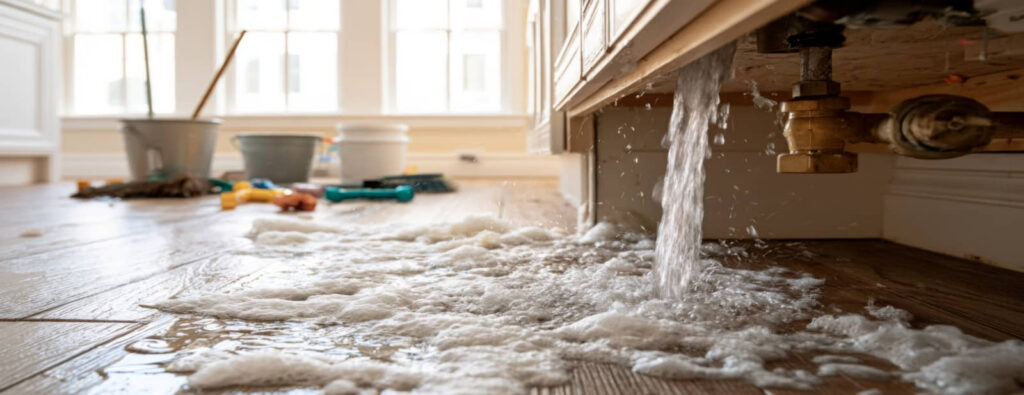
Many insured homes files a water damage claim each year, so you’re not alone when a pipe bursts. Burst Pipe damage requires immediate action, starting with shutting off the main water supply, cutting power to affected areas, and protecting nearby belongings. From there, the restoration process moves into water extraction, drying, hidden moisture checks, and structural repairs. One overlooked step, however, can allow damage to continue long after the visible water is gone.
Key Takeaways
- Shut off the main water supply immediately and cut power to affected areas if it is safe to do so.
- Remove standing water fast with towels, a wet vac, or a pump to limit further damage.
- Move rugs, furniture, electronics, and documents away from the leak to protect them from moisture.
- Dry the area with fans, dehumidifiers, and open doors to reduce hidden mold and structural damage.
- Inspect for hidden damage, document everything, and repair damaged drywall, flooring, insulation, and plumbing.
What To Do in the First 10 Minutes
In the first 10 minutes after a pipe bursts, shut off the main water supply immediately, then cut power to any affected areas if it’s safe to do so.
You’ll then move quickly but calmly, because every minute limits spread. Wipe up standing water with towels or a wet vac, and lift rugs or cushions that trap moisture.
If you can, open doors and windows to improve airflow. Remove nearby valuables, papers, and electronics from the wet zone.
Document visible damage with photos for your records and for your insurance team.
These steps support water damage restoration after a burst pipe and help you stay in control. You’re not handling this alone; the right response sets your home’s recovery on track.
Stop the Water and Protect Your Home
Once you’ve handled the first few minutes, your next priority is to stop the flow at the source and secure the space around the leak. Shut off the main water valve immediately, then confirm that fixtures downstream are no longer pressurized. If the burst is near an appliance, close its local supply valve too.
Next, protect your home’s vulnerable areas by moving valuables, electronics, and documents away from the affected zone. Lay down towels or absorbent barriers to keep water from spreading under baseboards and into adjoining rooms.
If you can do it safely, turn off electricity to the impacted area at the breaker. Keep paths clear so everyone can move through the home without slipping. These steps help your household stay organized, calm, and ready for the next stage.
Water Damage Restoration: Remove and Dry Water
Start removing standing water as soon as the area is safe, using a wet/dry vacuum, pump, mop, or towels depending on the amount present.
You’ll want to work from the edges inward so you don’t spread moisture farther. Empty extraction equipment often, and keep going until the visible water’s gone.
Next, dry the area with high-velocity fans and a dehumidifier to pull moisture from air and materials. Open interior doors to improve circulation, and raise damp items off the floor so air can reach them.
Check the space several times a day and adjust airflow as needed. This step helps your home stabilize, reduces ongoing damage, and puts you back in control with a clear, practical recovery plan.
Find Hidden Water Damage
Even after visible water is gone, hidden moisture can still be trapped behind walls, under flooring, and inside cabinets, so you’ll need to inspect these areas carefully. You’re not alone in this step; a methodical check helps your space recover safely and fully.
- Feel baseboards, drywall, and trim for cool or damp spots.
- Use a moisture meter on suspect materials and compare readings.
- Look for swelling, staining, peeling paint, or a musty odor.
Check seams, corners, and low points where water settles after a burst pipe. If one room was affected, inspect adjacent spaces too, since moisture can travel through framing and cabinetry.
Work slowly and document anything unusual so you can track what needs attention next.
Repair Damage and Verify Safety
Replace damaged materials methodically and verify that the area is safe before you reopen it to normal use. You’ll remove warped drywall, swollen trim, soaked insulation, and any flooring that won’t recover.
Then you’ll install matching replacements, seal joints, and restore finishes with care. Check plumbing connections, electrical outlets, and nearby fixtures for leaks, corrosion, or heat damage.
Test moisture levels in framing and subfloors so you know the structure has dried fully. If you find mold, odor, or soft spots, you’ll address them before closing walls.
Confirm GFCI and breaker function, then restore power only when everything passes inspection. This step helps you reenter your space with confidence, knowing your home is sound, clean, and ready for normal life again.
Frequently Asked Questions
How Quickly Should My Insurance Claim Be Filed?
You should file your insurance claim immediately, ideally within 24 hours. You’ll protect coverage, speed assessment, and reduce disputes. Document damage, notify your insurer, and keep every receipt and photo for support.
Will My Belongings Need to Be Professionally Cleaned?
Yes, you’ll often need professional cleaning for porous or contaminated items. You’ll get a damage assessment first, then technicians will clean, sanitize, and decide what’s salvageable, so you can protect what matters most.
How Long Does Mold Typically Take to Start Growing?
Mold typically starts growing within 24 to 48 hours after moisture exposure. You’ll reduce risk fastest by removing water, drying materials, and controlling humidity quickly, so you can keep your space safer and more comfortable.
Can I Stay in My Home During Restoration?
Yes, you can stay if the damage’s contained and you’ve got safe utilities; coincidentally, that’s often the simplest outcome. You’ll need to avoid wet areas, follow technicians’ guidance, and monitor humidity closely.
What Documents Should I Keep for Reimbursement?
You should keep repair estimates, invoices, photos, videos, moisture readings, inventory lists, receipts, and insurer communications. You’ll use them to verify losses, support claims, and speed reimbursement, and you’ll feel more confident together through the process.
Review
When a pipe bursts, every minute matters. You’ll shut off the water, cut power, and protect the area before the damage spreads. Then you’ll remove standing water, dry hidden moisture, and check for what you can’t see. Next, repairs begin, but safety comes first. Before you return to normal, every system needs a careful final check. What seems under control may still hide risk—so stay methodical, and let each step prove the next is safe.