
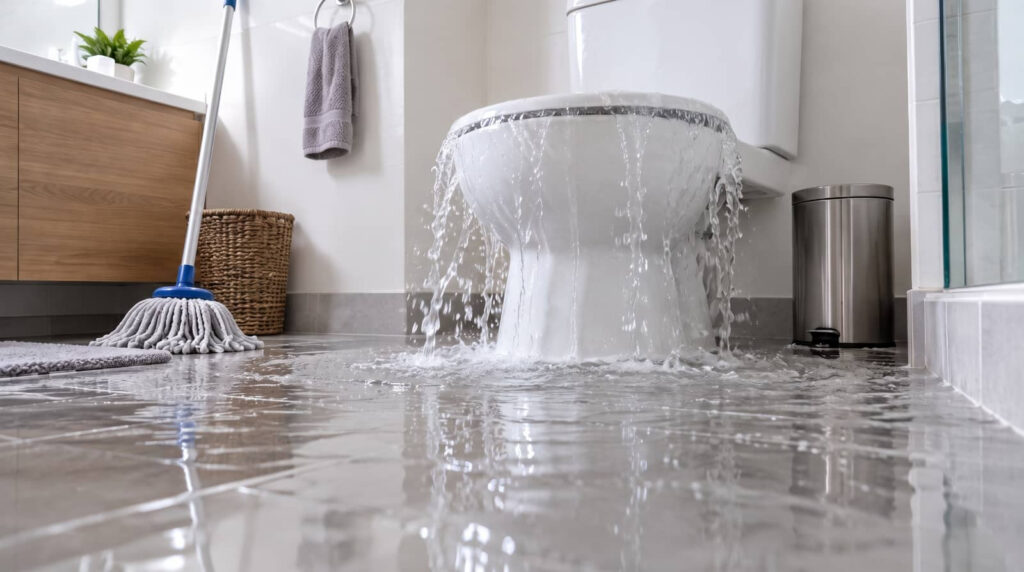
Water damage cleanup after toilet overflow requires immediate action to prevent contamination and further property damage. When a toilet overflows, you need to stop the water at its source, isolate the affected area, and treat potentially contaminated surfaces with care. Professional water damage cleanup after a toilet overflow includes removing standing water, discarding heavily contaminated porous materials when necessary, disinfecting hard surfaces, and thoroughly drying the affected area to help prevent mold growth. Because contaminated water can seep into flooring, walls, and other hidden spaces, a thorough inspection and proper cleanup are essential to protect your property and reduce potential health risks.
Key Takeaways
- Shut off the toilet’s water supply immediately and stop the overflow source before any cleanup begins.
- Treat all overflow water as contaminated; wear gloves, nonporous shoes, and limit foot traffic through the area.
- Remove standing water and soaked materials quickly, bagging contaminated debris in sealed heavy-duty bags.
- Clean hard surfaces first, then disinfect them with a product labeled for sewage or toilet overflow.
- Dry the area thoroughly and call professionals if sewage, hidden damage, electrical issues, or 24-hour saturation are involved.
Stop the Toilet Overflow First
First, shut off the toilet’s water supply valve to stop more water from entering the bowl or tank. If the valve won’t turn, shut off the home’s main water supply right away.
Then flush once to empty the tank if it’ll drain, but don’t keep flushing if the bowl is already full. You should also lift the tank lid carefully and check that the flapper seals closed.
In water damage cleanup after toilet overflow, every second counts, so move fast and keep your footing stable. If water keeps rising, disconnect the supply line only if you can do it safely.
You’re not alone here; take control of the source first, then assess the remaining cleanup with care and confidence.
Protect the Room From Contamination
Once the flow stops, treat the overflow as contaminated water and keep it contained. Put on gloves and nonporous shoes before you move anything.
Block foot traffic with towels or plastic sheeting at the doorway, and keep pets and children out. Remove dry items from the area first, then lift nearby fabrics, rugs, and paper goods so moisture can’t spread.
Bag wet waste separately and seal it right away. If water has reached adjoining rooms, place absorbent barriers at thresholds and avoid dragging equipment through clean spaces.
Keep ventilation controlled so you don’t spread aerosols. Work methodically, and you’ll protect your space and your crew.
A careful perimeter helps everyone stay on the same page and lowers cross-contamination risk.
Why Toilet Overflow Water Is Unsafe
Toilet overflow water is unsafe because it can carry fecal bacteria, viruses, and other pathogens from the bowl and drain line into floors, baseboards, and porous materials.
You’re dealing with a sanitation hazard, not just a mess. Contaminants can spread through splashes, foot traffic, and contact with tools or gloves, so your cleanup team needs strict hygiene controls.
Even if the water looks clear, it can still contain:
- E. coli and other enteric bacteria
- Norovirus, hepatitis A, and similar viruses
- Parasites, chemicals, and waste residue
Treat every affected surface as potentially contaminated until you’ve isolated the area and followed safe cleanup practices.
If you keep your distance and work methodically, you protect yourself and everyone else in the home.
Remove Standing Water and Wet Materials
First, you’ll pump out all standing water with a wet vacuum or submersible pump to stop further spreading and reduce saturation.
Next, you’ll remove any soaked carpet, padding, drywall, or insulation that can’t be fully sanitized and dried.
Bag all contaminated debris in sealed heavy-duty bags before disposal to limit cross-contamination.
Pump Out Standing Water
Start by pumping out any standing water and removing soaked materials as soon as it’s safe to do so. Use a submersible pump, wet vacuum, or utility pump rated for contaminated water, and route discharge to a sanitary drain if local rules allow.
Keep your footing stable, wear gloves, boots, and eye protection, and avoid contact with energized outlets or appliances. Work in sections so you can verify that water levels drop evenly and hidden pockets don’t remain.
- Shut off power to affected areas first.
- Check for backflow risks before pumping.
- Monitor pump intake to prevent clogs.
As you work, stay connected with your cleanup team and communicate any hazards right away. Quick, controlled removal helps your space recover safely.
Remove Soaked Materials
Pull out soaked materials right away once you’ve removed the standing water, because porous items can hold contaminated moisture and spread bacteria or odors. You should remove rugs, towels, bath mats, cardboard, and any warped paper products from the affected area.
Use gloves, knee protection, and closed-toe shoes so you can work safely around contaminated surfaces. Lift items carefully to avoid dripping onto clean areas, and keep your path controlled. If an item has absorbed toilet water, assume it’s contaminated until you can inspect it.
Set aside salvageable hard goods for cleaning and disinfection, and separate anything that’s too damaged to recover. Check baseboards, trim, and lower cabinet edges for hidden saturation, since trapped moisture can support mold growth.
Bag Contaminated Debris
Seal contaminated debris in heavy-duty trash bags as you clear out standing water and soaked materials, so you can keep bacteria and odors from spreading through the home.
Wear gloves, boots, and eye protection, and work from the cleanest area toward the most contaminated. Bag towels, paper goods, and small carpet sections immediately; don’t let them sit in piles.
- Double-bag sharp or saturated debris.
- Tie each bag securely before moving it.
- Place bags outside in a designated disposal area.
Avoid compressing bags, since that can force liquid out and contaminate nearby surfaces. If water has reached insulation, drywall, or porous padding, remove those materials too.
Keep the work zone ventilated, and wash your hands after each trip. When you handle debris this way, you protect your household and support a safer cleanup together.
Disinfect Surfaces After Toilet Overflow Cleanup
After you remove contaminated water, choose a disinfectant that’s labeled for sewage or toilet overflow and follow the contact time exactly.
You should clean hard surfaces first to remove residue, then apply the disinfectant to all affected areas.
Pay close attention to high-touch points like handles, switches, and fixtures, and disinfect them thoroughly to reduce the risk of cross-contamination.
Choosing Disinfectants Safely
Because toilet overflow water can carry contaminants, you’ll need a disinfectant that’s labeled for hard, nonporous surfaces and effective against bacteria and viruses.
Choose products with clear EPA registration and follow the contact time exactly, so you and your household stay protected together. Avoid mixing chemicals, especially bleach with ammonia or acids, because toxic gases can form.
Wear gloves and, if splash risk exists, eye protection. Check the label for:
- approved surface use
- dilution instructions
- required wet time
If the product requires pre-cleaning, do that first, then apply the disinfectant as directed.
Keep children and pets away until the area’s dry and ventilated. If you’re unsure whether a product fits the surface or contamination level, use one specifically intended for sewage-related cleanup.
Cleaning Hard Surfaces
Once you’ve chosen the right disinfectant, clean hard, nonporous surfaces by removing visible soil first, then applying the product exactly as directed.
Wear gloves, keep the area ventilated, and use disposable cloths or paper towels so you can contain contamination safely. Work from the cleanest section toward the dirtiest, and replace wipes before they spread residue.
Maintain the full wet contact time on the label; don’t rush drying. After treatment, rinse food-contact surfaces if the product requires it, then let the surface air-dry or dry with clean towels.
Dispose of used materials in sealed bags, and wash your hands thoroughly. If you notice damaged grout, cracked tile, or persistent odor, pause and assess for hidden contamination.
You’re part of the cleanup team now, and careful steps protect everyone.
Sanitizing High-Touch Areas
Disinfect the high-touch spots first—light switches, door handles, faucet handles, toilet flush levers, and any reachable appliance controls—since these surfaces pick up contamination fast during a toilet overflow cleanup.
Wear gloves, keep ventilation on, and use an EPA-registered disinfectant labeled for bathroom bio-contamination. Follow the required dwell time so the product can kill pathogens before you wipe.
- Spray or apply the disinfectant evenly.
- Keep the surface visibly wet for the full contact time.
- Replace cloths or wipes when they get dirty.
If you’re cleaning with others, work from the least soiled area to the most soiled area to avoid cross-contamination.
Sanitize switches, knobs, and handles again after drying if you touched them during cleanup.
Dry the Room to Prevent Mold
After you remove the contaminated water, dry the room fast to reduce the risk of mold growth. Open windows if outdoor conditions are dry, and run exhaust fans to move moist air out.
Use a dehumidifier sized for the room, and keep it on continuously until humidity drops to a safe level. Position air movers to push air across floors, baseboards, and lower walls, but don’t point them directly at wet surfaces too closely.
Remove soaked rugs, towels, and other porous items so they can dry separately. Check that HVAC vents stay clear so air can circulate evenly.
Wear gloves and a mask while working, since damp contamination can still irritate you. Stay patient and stay coordinated; thorough drying protects your space and helps your household recover safely together.
Check for Hidden Water Damage
Even when the visible water is gone, inspect for hidden damage behind baseboards, under flooring, and inside wall cavities, because toilet overflow can soak materials you can’t see.
You should check seams, edges, and fastener points for swelling, soft spots, staining, or a musty odor. Use a flashlight and a moisture meter if you have one, and keep your hands protected.
- Lift a small section of flooring to verify the subfloor is dry.
- Remove trim only where you need access, then label parts for reinstallation.
- Watch for bubbling paint, warped drywall, and damp insulation.
If you find hidden moisture, mark the area and continue drying until readings stabilize.
Careful inspection helps you protect your space and keep your home safe together.
When to Call a Water Damage Pro
Call a water damage pro if the overflow involved sewage, spread under flooring or into walls, or left behind saturated materials you can’t fully dry and sanitize yourself.
You should also call for help if the water stayed longer than 24 hours, affected electrical outlets, HVAC, or structural framing, or triggered a persistent odor after cleaning.
Professionals use moisture meters, antimicrobial treatments, and industrial drying equipment to control contamination and prevent mold.
If you’re unsure about the damage level, trust the safer path and bring in a licensed team. You’re not overreacting; you’re protecting your home and everyone in it.
Quick expert intervention can reduce repair costs, limit health risks, and help your space return to a clean, safe condition faster.
Frequently Asked Questions
How Do I Know if the Overflow Reached the Subfloor?
You’ll know it likely reached the subfloor if the floor feels soft, spongy, or discolored, and moisture readings stay high. Lift a small section of flooring or baseboard to verify saturation and protect yourself.
Can I Use Household Bleach on All Bathroom Surfaces?
No, you can’t use household bleach on all bathroom surfaces; it’s a double-edged sword. You should test materials first, avoid porous finishes, and follow label dilution so you protect your space and your team.
How Soon Should I Replace Soaked Drywall?
You should replace soaked drywall within 24 to 48 hours if it’s contaminated or remains damp. You’ll avoid mold and hidden damage by removing it promptly, then disinfecting, drying, and inspecting framing thoroughly.
What Protective Gear Should I Wear During Cleanup?
You should wear nitrile gloves, waterproof boots, eye protection, and an N95 or better respirator; add long sleeves and disposable coveralls. You’ll protect yourself, reduce exposure, and clean more confidently and safely.
Will My Homeowners Insurance Cover Toilet Overflow Damage?
Usually, yes, but you’ll need to check your policy: like a contract’s fine print, coverage often depends on the cause, your deductibles, and whether negligence played a role. Document damage, call your insurer, and limit exposure.
Final Thoughts
When your toilet overflows, stop the source fast, seal off the space, and suit up before you touch contaminated water. Remove standing water, discard soaked materials, disinfect hard surfaces, and dry everything completely to prevent hidden hazards and mold. If water reached walls, flooring, or subfloors, you shouldn’t guess—inspect carefully or call a pro. Swift, safe, sanitary action protects your home, health, and peace of mind.