
Like a leak in a dam, water damage can spread fast once it starts. You need to stop the source, cut power if it’s safe, and move furniture and valuables out of reach. Then remove standing water, start fans and dehumidifiers, and clean affected surfaces before mold takes hold. If moisture keeps climbing or the damage is more than you can control, the next step matters more than you might expect.
Key Takeaways
- Stop the water at the source by closing the nearest valve or main shutoff immediately.
- Shut off electricity if safe, and avoid standing water until the area is de-energized.
- Remove standing water quickly and start drying with fans, dehumidifiers, and open doors or cabinets.
- Move salvageable furniture, rugs, and electronics out of the water path and document damage for insurance.
- Call a water damage professional if water has spread, hidden areas are wet, or materials feel saturated.
What Emergency Water Damage Cleanup Includes
Emergency water damage cleanup starts by removing standing water fast and then setting up drying equipment before moisture can spread into walls, floors, and insulation.
You’ll move quickly through extraction, air circulation, dehumidification, and moisture monitoring so you can limit structural loss and mold risk.
In a real emergency water damage cleanup, you also protect salvageable contents, remove soaked materials, and document affected areas for insurance and repair crews.
You’re not alone in this process; you’ll work with a team that checks hidden damp spots, tracks humidity, and adjusts drying until readings stabilize.
Every step needs to be precise, because delayed cleanup lets damage deepen and repairs climb.
When you act now, you keep your space safer, cleaner, and ready for restoration.
Stop the Water at the Source
Before you do anything else, stop the water at its source so the damage doesn’t keep spreading. If a supply line is leaking, close the nearest shutoff valve. If a fixture overflows, stop the flow at the fixture handle or the main supply.
When you can’t isolate the leak, turn off the main water valve for the property. Move fast, but keep your steps controlled and focused. If the water comes from outside, block the entry point with sandbags, towels, or a temporary barrier.
As you work, watch for the source to restart or drip again. Staying together in this moment matters: you’re protecting your space, your belongings, and everyone who counts on the home.
Once the source is controlled, you can move to cleanup with confidence and less risk.
Shut Off Power and Check Safety
Shut off electricity at the main breaker if you can reach it safely, because water and live power create an immediate shock risk.
Don’t step into standing water until you’ve confirmed the area is de-energized, and keep clear of outlets, cords, and submerged appliances.
Inspect for hazards like gas leaks, damaged wiring, and weakened floors before you enter the space further.
Shut Off Electricity
Cut the power at the breaker if water is near outlets, cords, or appliances, and don’t touch any electrical equipment while you’re standing in water.
If you can reach the panel safely, switch off the affected circuit or the main breaker. If the panel is in a wet area, stop and call an electrician or utility provider.
Use a flashlight, not a candle, so you can inspect the room without adding fire risk.
Keep your team clear of sockets, extension cords, and plugged-in appliances until you’ve confirmed the area is de-energized.
If you smell burning, hear buzzing, or see sparks, evacuate immediately.
Your crew’s safety comes first, and a cautious shutdown helps you protect the space, the equipment, and everyone working beside you.
Avoid Standing Water
Stay out of standing water until you’ve confirmed the area is safe, because it can hide electrical hazards, contaminated water, and unstable flooring.
If you haven’t already, keep power off at the breaker and don’t step into puddles to “check” anything. Use a flashlight from dry ground, and move only if you can keep your feet on a dry, solid surface.
If water is near outlets, appliances, or cords, treat the zone as energized until proven otherwise. Wear insulated footwear and gloves if you must assess from the edge.
Keep family members and pets back, and set a clear boundary so everyone in your home team stays protected. Quick, careful decisions now help you avoid shocks, falls, and deeper damage.
Inspect for Hazards
Before you enter the affected area, turn off power at the breaker if you can reach it safely and inspect for immediate hazards.
Stay with your team and move like a crew: check for sagging ceilings, broken glass, sharp debris, and gas odors. If water is near outlets, wiring, or appliances, keep out and call a pro. Wear boots, gloves, and eye protection before you step in.
- Listen for cracking or shifting above you.
- Mark unsafe zones so nobody wanders in.
- Use a flashlight, not open flames, to scan the space.
If you see sparks, smoke, or hear buzzing, back out now. Your next move is safety, then cleanup. Restore access only after the area is stable and dry.
Protect Furniture and Belongings
Move furniture, rugs, electronics, and other valuables out of the water path as soon as it’s safe to do so. You’ll protect shared spaces, reduce loss, and keep your home’s important pieces from soaking up more moisture.
Lift items with two people when possible, and carry them by stable frames, not loose parts. Place wood furniture on blocks or plastic furniture coasters to keep legs above damp flooring.
Remove cushions, bedding, and fabric items so they can dry separately. Unplug electronics before moving them, then set them on dry surfaces away from walls.
Photograph damage for records before you rearrange anything. Keep salvaged belongings grouped in one clean area so your household can stay organized and act fast together.
Remove Standing Water Fast
You need to remove standing water immediately, and you should stop the water source first if you can do it safely.
Use a wet vacuum for deep pooling, then mop up smaller puddles to reduce saturation.
Every minute counts, because fast extraction limits swelling, staining, and mold growth.
Use Wet Vacuums
Grab a wet vacuum and remove standing water as quickly as possible to limit how far the damage spreads. You can move fast and protect your home’s structure, flooring, and contents when you keep the nozzle low and maintain steady suction.
Empty the tank often so performance doesn’t drop, and work in overlapping passes to catch hidden water.
- Check cords, plugs, and filters before you start
- Vacuum along baseboards, seams, and low spots first
- Wear gloves and boots to stay safe and steady
If the area feels unsafe, shut off power at the breaker and call a water cleanup pro. Acting now helps your crew handle the mess with confidence and keeps the damage from getting worse.
Mop Small Puddles
Mop up small puddles right away so moisture doesn’t soak deeper into floors, trim, or subflooring.
Use a clean, absorbent mop and wring it out often so you’re removing water, not spreading it. Work from the outer edges toward the center, then empty the bucket before it gets heavy and less effective.
If you’re in a team, take turns so the area keeps moving toward dry. Check corners, under cabinets, and along baseboards where water hides and lingers.
Replace soaked towels or mop heads fast to avoid rewetting the surface. After each pass, look for sheen or darkened spots.
Your goal is simple: leave only a thin damp film that can dry quickly with airflow.
Stop Water Source
Shut off the water source immediately to stop more water from entering the space, then remove standing water as fast as possible.
You need to act like your floor system is already at risk, because it is. Use a wet vac, sump pump, or bucket brigade to clear water from low points first. Pull rugs, furniture, and loose items out of the wet zone so drying can start.
- Check valves, supply lines, and appliance hookups
- Shut off electricity if water reaches outlets
- Ventilate the area with fans and open windows
Work together, stay alert, and keep the cleanup moving until surfaces feel only damp, not wet.
Every minute counts now.
Dry Wet Areas With Fans and Dehumidifiers
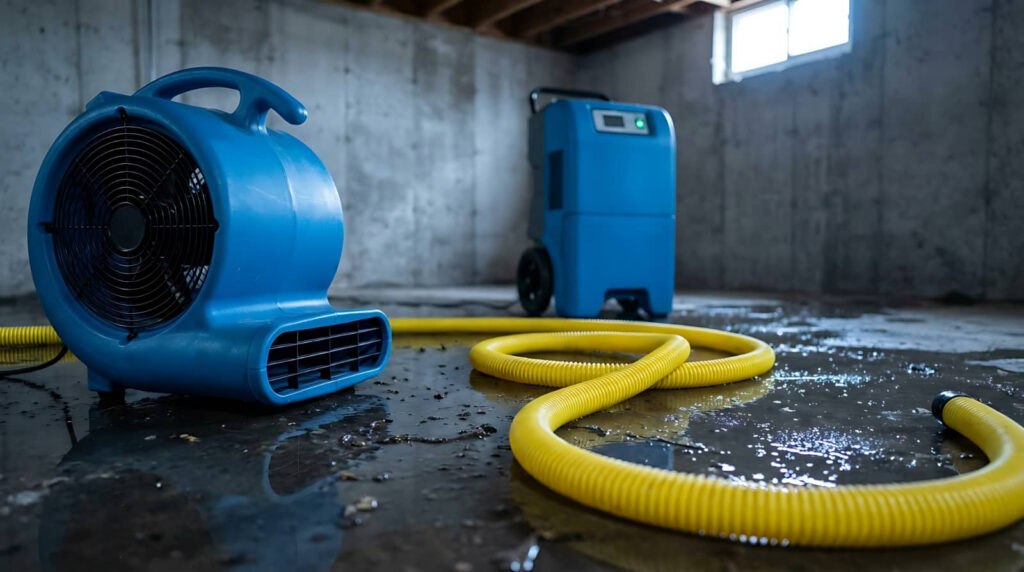
Once you’ve removed standing water, you need to dry wet areas fast with fans and dehumidifiers to stop moisture from spreading into walls, floors, and hidden spaces.
Position fans to push air across damp surfaces, not straight at one spot, and keep windows closed if outdoor air is humid. Run dehumidifiers in the smallest affected rooms first so they can pull moisture from the air efficiently.
Lift rugs, open cabinet doors, and move furniture slightly so air can reach trapped wet zones. Check cords, outlets, and equipment placement before you start. You’re working to protect your space and keep your recovery team strong.
Monitor progress every few hours; if surfaces still feel cool, slick, or damp, keep drying. Speed matters here, because lingering moisture can spread fast and worsen damage.
Clean and Disinfect Water-Damaged Surfaces
Scrub and disinfect every water-damaged surface as soon as it’s safe to enter the area, because moisture can leave behind bacteria, mildew, and contaminants that keep spreading.
Use a detergent solution first, then apply an EPA-registered disinfectant matched to the material. Work from cleaner areas toward the dirtiest so you don’t drag grime through the space.
Wear gloves, eye protection, and a mask if residue smells strong. Rinse hard surfaces after contact time, then dry them fully.
- Wash walls, floors, and baseboards with hot water and detergent
- Disinfect sinks, counters, and handles with a labeled cleaner
- Replace any porous item that stays stained or slimy
Move fast, stay methodical, and you’ll protect your home and everyone in it.
Call a Water Damage Restoration Pro
If the water keeps spreading, the materials feel saturated, or the source might be contaminated, call a water damage restoration pro right away.
You need trained help when moisture has moved into walls, subflooring, insulation, or HVAC spaces, because hidden damage can escalate fast.
A qualified team will inspect the affected area, classify the water, extract remaining moisture, set up industrial air movers and dehumidifiers, and document conditions for insurance.
Don’t wait for odors, warping, or mold to show up. You’ll protect your home and keep your crew of helpers, family, or neighbors safer by acting early.
If you’re unsure, treat it as urgent and get a pro on-site. Fast response can save materials, reduce costs, and restore your space sooner.
Frequently Asked Questions
How Quickly Should Mold Start Growing After Water Damage?
Mold can start growing in as little as 24 to 48 hours after water damage. You need to remove moisture fast, dry surfaces thoroughly, and inspect hidden areas now to keep contamination from spreading.
Can Insurance Cover Emergency Water Damage Cleanup Costs?
Yes, your policy can cover emergency water damage cleanup, if the loss is sudden and accidental. You’ll need to document everything, call your insurer fast, and keep receipts—because, like a ship’s captain, you can’t steer blind.
What Signs Indicate Hidden Water Damage Inside Walls?
You’ll spot hidden wall damage by musty odors, peeling paint, soft drywall, bubbling wallpaper, discoloration, swelling, warped trim, and unexplained moisture. You should act fast, because trapped water can spread mold and structural damage.
How Do I Know if My Water Is Contaminated?
If it smells foul, looks cloudy, or came from sewage, floodwater, or a broken line, you’ve got contamination. You should wear gloves, avoid contact, and call a pro immediately—this water can cause chaos.
When Should I Replace Damaged Drywall or Flooring?
You should replace drywall or flooring if you’ve had sewage, mold growth, swelling, warping, softening, or persistent odors. If materials stayed wet over 24–48 hours, you’ll usually need replacement to prevent hidden damage.
Recap
When water breaks into your home, act like a captain patching a leaking hull at sea: stop the source, cut power, and move valuables to higher ground. Then pull out standing water, aim fans and dehumidifiers at every wet surface, and clean what the flood touched. Keep checking moisture and humidity so hidden damage doesn’t spread. If the tide keeps rising or the damage looks deep, call a water damage restoration pro right away.