
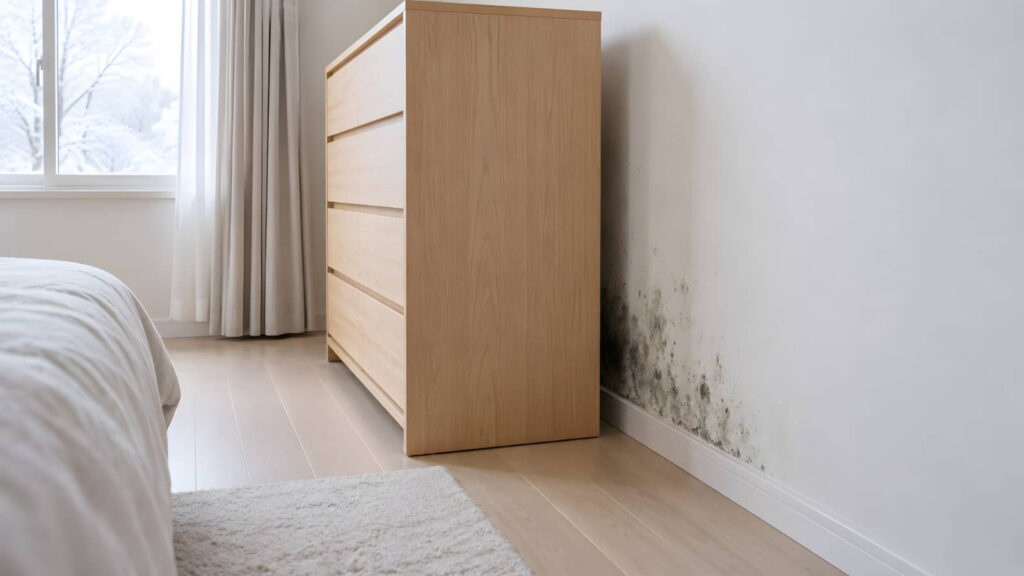
Mold remediation after water damage involves more than drying wet surfaces. After a basement leak, you might dry the carpet and run fans, only to notice a musty odor behind the drywall weeks later. Moisture can linger in insulation, wall cavities, and subfloors, creating conditions for hidden mold growth and reduced indoor air quality. Professional mold remediation after water damage includes identifying moisture sources, inspecting affected areas, and safely removing mold-contaminated materials to help prevent recurring problems.
Key Takeaways
- Drying visible surfaces alone may leave hidden moisture in walls, floors, and insulation, allowing mold to keep growing.
- Porous materials can trap water and spores, so contaminated drywall, carpet, or insulation often need removal, not just drying.
- Mold remediation includes containment, negative pressure, and HEPA filtration to stop spores from spreading during cleanup.
- Thermal imaging and moisture meters help find concealed dampness that household fans and open windows often miss.
- Call a professional if mold returns, odors persist, or moisture remains in hidden areas after water damage.
What Mold Remediation Means After Water Damage
Mold remediation after water damage means identifying and removing mold growth caused by lingering moisture, then drying and treating affected materials to prevent it from returning.
You inspect walls, floors, insulation, and hidden cavities for visible colonies, musty odor, staining, and dampness.
Then you isolate contaminated areas, remove porous materials that can’t be cleaned, and clean nonporous surfaces with approved methods.
You also verify moisture levels with meters, because mold can persist where water once collected.
In mold remediation after water damage, you’re not just fixing damage—you’re protecting your home’s air quality and your household’s health.
When you follow a structured process, you join a community of property owners who handle moisture issues early, reduce risk, and restore safe, stable conditions.
Why Drying Alone Can Leave Mold Behind
Drying can leave hidden moisture pockets inside walls, floors, and insulation, so you may still have conditions that support mold growth.
If water has penetrated porous materials, mold can survive below the surface even after the exterior feels dry.
You also can’t rely on surface drying alone, because it doesn’t remove spores already embedded in contaminated materials.
Hidden Moisture Pockets
Even after visible water dries, moisture can stay trapped inside wall cavities, subfloors, insulation, and other concealed spaces, creating conditions where mold can develop out of sight.
You may feel confident once surfaces look dry, but hidden pockets often remain because airflow doesn’t reach every layer evenly.
When you skip targeted moisture checks, you can miss elevated readings behind trim, under flooring, or near framing joints. That leaves your space vulnerable to ongoing microbial growth and persistent odors.
You should use thermal imaging, moisture meters, and selective access openings to verify drying in hard-to-see areas.
If readings stay high, you need professional remediation, not just more fans.
With the right assessment, you protect your home and stay part of a healthier, safer environment.
Mold In Porous Materials
When porous materials get wet, they can absorb moisture deep into their structure, and drying the surface doesn’t always remove what’s held inside.
You’re dealing with drywall, insulation, carpet padding, wood, and ceiling tiles that can retain water in fibers, pores, and voids. That retained moisture supports mold growth even after the surface feels dry.
In these materials, mold can anchor into the matrix and spread through microscopic channels, making complete cleanup harder.
If you belong to a team restoring a water-damaged space, you need to treat these materials as high-risk and evaluate them carefully.
Porous items that stayed wet too long often require removal, not just drying, to reduce contamination and prevent recurring growth in your home or building.
Surface Drying Misses Spores
Surface drying can leave mold spores and hyphal fragments behind because visible dryness doesn’t mean a material is fully decontaminated. You may see a dry wall, floor, or cabinet, but spores can cling in seams, dust, and biofilm.
When you only dry the surface, you don’t remove hidden contamination in pores, joints, or layered materials. Those particles can rehydrate later and resume growth if humidity rises again.
That’s why you need more than fans and dehumidifiers after water damage. You should inspect affected areas, clean with appropriate methods, and remove contaminated porous materials when needed.
If you act early and thoroughly, you protect your space and help your home or building return to a safer, healthier condition for everyone inside.
Signs You Need Mold Remediation Now
You need mold remediation now if you see visible mold growth on walls, ceilings, insulation, or other damp materials.
A persistent musty odor also indicates active microbial growth, even when you can’t see a colony.
These signs mean moisture is still present and you should act quickly to limit further damage.
Visible Mold Growth
Visible mold growth is a clear warning sign that moisture remains in the structure and mold remediation is needed now. You may see black, green, white, or gray colonies on drywall, baseboards, insulation, framing, or grout.
If the surface looks fuzzy, powdery, or slimy, active growth is likely. Don’t paint over it or wipe it dry and assume the problem’s gone; visible colonies mean spores have already colonized damp materials.
You need prompt containment, source correction, and removal of affected porous materials to stop spread and protect indoor air quality. If the affected area keeps expanding after drying, the assembly likely still holds moisture.
Acting fast helps you protect your space, your team, and the people who count on a healthy building.
Persistent Musty Odors
A persistent musty odor often means hidden moisture and microbial growth remain inside walls, under flooring, or in insulation even when no mold is visible.
You may air out rooms, but if the smell returns, drying alone hasn’t solved the source. That odor usually comes from damp porous materials, stagnant air pockets, or contaminated HVAC components releasing volatile compounds.
You should inspect affected areas with moisture meters and infrared imaging, then check baseboards, drywall, subflooring, and ductwork.
If humidity stays elevated or the smell intensifies after rain or HVAC use, you likely need professional mold remediation.
Acting quickly helps you protect your home, reduce airborne exposure, and restore a healthier indoor environment for everyone in your space.
Where Moisture Hides After Water Damage
After water damage, moisture often lingers in hidden materials long after surfaces appear dry. You’ll often find it in wall cavities, insulation, subflooring, baseboards, and behind cabinets where airflow stays limited.
Carpet padding, hardwood seams, ceiling assemblies, and drywall cores can also hold water deep inside. In your HVAC system, condensation can collect in ducts, pans, and nearby framing.
Porous materials absorb water fast, then release it slowly, so the room may feel dry while damage continues below the surface. If you live in a shared building or tightly sealed home, trapped humidity can persist even longer.
That’s why drying the visible area alone can leave you exposed to lingering moisture, structural deterioration, and conditions that support mold growth.
How Professionals Find Hidden Mold During Remediation
Professionals don’t rely on surface dryness alone; they inspect concealed spaces where mold often develops after water intrusion. You’ll see them probe behind baseboards, under flooring, inside wall cavities, and above ceiling tiles with moisture meters, infrared cameras, and borescopes.
They compare readings in affected and unaffected areas to pinpoint anomalies, then trace staining, odors, and material swelling to the source. If they suspect hidden growth, they may lift small sections of material for direct inspection and use air or surface sampling when conditions warrant.
This method lets you join a team that treats hidden contamination as a measurable risk, not a guess. By documenting findings precisely, they help you understand where mold is active and where drying hasn’t fully protected your space.
What Professional Mold Remediation Includes
When mold remediation is needed, the process typically starts with containment, source control, and material removal so the contamination doesn’t spread. You’ll see trained technicians isolate affected zones, establish negative pressure, and use HEPA filtration to capture airborne spores.
They then remove porous materials that can’t be reliably cleaned and clean remaining surfaces with approved methods.
- Contain the work area.
- Remove damaged materials.
- Clean, dry, and verify the space.
You also get moisture correction, because mold won’t stay controlled if leaks, seepage, or trapped humidity remain.
Professionals document conditions, protect adjacent rooms, and confirm that the area is ready for re-occupancy. This structured approach helps you restore a safer, more predictable environment and feel confident your space is being handled by people who know the process.
Why DIY Cleanup Often Misses the Problem
DIY cleanup often misses hidden moisture, porous contamination, and airborne spores, so the visible surface can look better while the underlying problem keeps spreading.
When you wipe a wall or carpet, you may remove stains but not the damp material inside drywall, insulation, or subflooring. Household fans and open windows can’t always lower moisture in concealed cavities fast enough.
You also can’t reliably verify dry conditions without meters, inspection tools, and controlled containment. If you scrub mold without isolating the area, you can disturb colonies and spread spores into adjoining rooms.
That leaves you and your household exposed to lingering odors, staining, and recurring growth. A careful, professional approach checks what you can’t see, so your space can truly recover, not just appear clean for now.
How to Prevent Mold After Repairs
Once repairs are complete, you still need to control moisture to stop mold from returning. You can protect your home by keeping indoor humidity between 30% and 60%, fixing leaks quickly, and drying spills within 24 hours.
Run exhaust fans in bathrooms and kitchens, and keep airflow moving through closets, attics, and crawl spaces. Seal gaps around plumbing and windows so humid air can’t enter hidden cavities.
- Inspect repaired surfaces weekly for staining, swelling, or musty odors.
- Maintain gutters, grading, and downspouts so water drains away from the structure.
- Replace any porous materials that stayed damp too long.
When you stay consistent, you’re helping your home stay dry, stable, and part of a healthier space for everyone.
When to Call a Mold Remediation Expert
If mold keeps returning, spreads across a large area, or appears inside walls, ceilings, or HVAC components, you should call a mold remediation expert right away.
You may also need help if you smell a persistent musty odor, see warped materials, or can’t fully dry porous building assemblies after flooding.
A qualified team can inspect hidden cavities, measure moisture, isolate contaminated zones, and remove affected materials safely.
They’ll also address the source of dampness so the problem doesn’t cycle back.
If anyone in your home has asthma, allergies, or immune concerns, fast intervention matters even more.
You don’t have to guess alone; getting professional remediation helps protect your space, your health, and your peace of mind.
Frequently Asked Questions
How Long Can Mold Take to Grow After Water Damage?
Mold can start growing within 24 to 48 hours after water damage if you don’t dry materials quickly. You should inspect hidden spaces, control humidity, and act fast to protect your home and belongings.
Is Mold Remediation Covered by Homeowners Insurance?
Usually, you’re covered if mold results from a sudden, accidental water loss, but not from neglect or long-term leaks. Check your policy limits, exclusions, and deductible, and document damage quickly to strengthen your claim.
Can Mold Affect Indoor Air Quality Without Visible Growth?
Yes, mold can affect your indoor air quality without visible growth. You can inhale spores and microbial VOCs from hidden colonies in walls, ducts, or carpets, which may trigger odors, irritation, and respiratory symptoms.
Should I Leave Home During Mold Remediation?
Yes, you should leave home if technicians contain, fog, or remove mold; “better safe than sorry.” You’ll reduce exposure to spores and chemicals. Ask your pro when it’s safe to return, and stay connected.
How Do I Choose a Qualified Mold Remediation Company?
Choose a qualified company by verifying licensing, insurance, and IICRC certification, then reviewing references, testing protocols, and written estimates. You should ask about containment, HEPA filtration, and post-remediation clearance so you feel confident.
Final Thoughts
When you face water damage, think of mold as a shadow that lingers where light and air can’t reach. Drying may clear the surface, but hidden moisture can still feed growth behind walls, under floors, and inside insulation. You need a full remediation process to uncover and remove what’s concealed. By acting quickly and choosing expert help, you protect your indoor air, stop recurring damage, and restore your home’s structure with lasting certainty.