
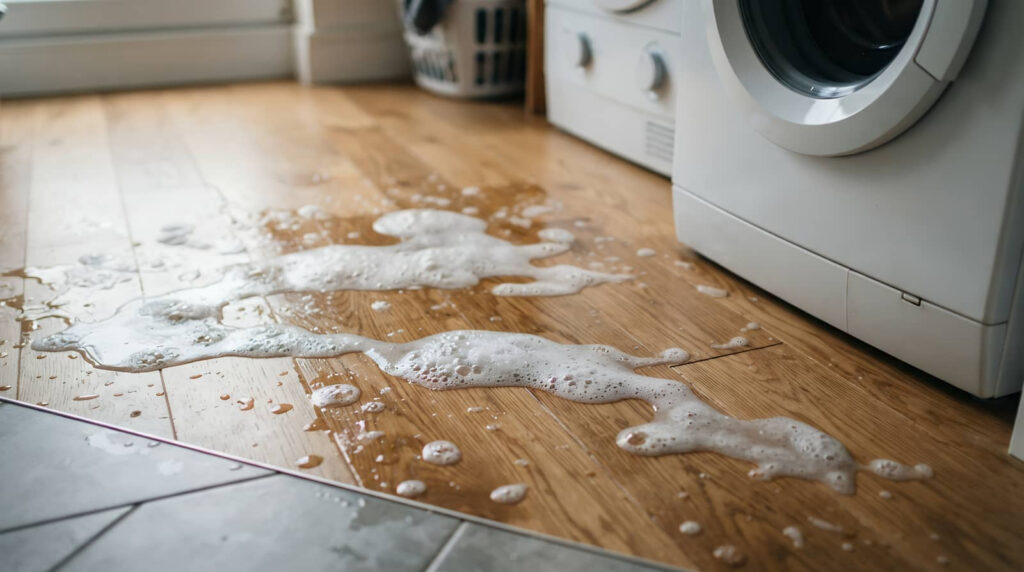
When an appliance leaks, you need to act fast to limit water damage and stop mold before it starts. Shut off the water and power, move nearby items, and begin drying the area with fans and dehumidifiers. But surface dryness can be misleading, and hidden moisture often remains inside walls or flooring. Knowing what to check next can save you from bigger repairs later.
Key Takeaways
- Shut off water and power immediately, then move nearby items and document the damage with photos.
- Dry wet areas fast using towels, ventilation, fans, and dehumidifiers to limit structural moisture.
- Check for hidden water in cabinets, flooring, and drywall using a moisture meter and visual inspection.
- Call a restoration professional if drywall, insulation, wiring, or subflooring is affected, or if odors or softness appear.
- Prevent future leaks by inspecting hoses and valves regularly, replacing weak lines, and installing leak detectors.
What to Do First After an Appliance Leak?
Start by shutting off the water supply to the leaking appliance and, if needed, the power to that area.
Then inspect the source without stepping in standing water, and keep everyone clear of the affected room.
If you can safely move nearby items, lift rugs, boxes, and loose furniture away from the leak path.
Place towels or a shallow container under active drips to limit spread.
Next, take photos of the damage for your records and insurance claim.
Call a qualified technician if the appliance seems damaged, and contact a restoration professional for water damage restoration after appliance leaks.
Acting quickly helps you protect your home, reduce hidden moisture, and stay in control with support from people who know the process.
How to Dry Out Appliance Leak Damage
Once the leak is contained, you’ll want to dry the area as quickly as possible to keep moisture from wicking into subfloors, drywall, and cabinets.
Open doors and windows if weather allows, then set up air movers to push air across wet surfaces. Run a dehumidifier to pull moisture from the room, and keep it in a closed space for best results.
Remove soaked rugs, mats, and loose items so air can reach the floor.
- Move air: Use fans to create constant circulation.
- Lower humidity: Keep the dehumidifier draining continuously.
- Expose surfaces: Lift baseboards or cabinet contents if needed.
You’re not just clearing water; you’re protecting your home’s structure.
Work steadily, and you’ll give the area the best chance to dry evenly and safely.
How to Check for Hidden Moisture and Mold
Even after the visible water is gone, moisture can stay trapped behind baseboards, under flooring, and inside wall cavities, where it can lead to mold growth and hidden structural damage.
You can check likely problem spots with a moisture meter, especially near cabinets, trim, and seams. Look for warped materials, dark staining, bubbling paint, or a musty odor, since those often signal dampness you can’t see.
Press on flooring and drywall; soft or spongy areas need attention. Lift small sections of loose flooring only if you can do so safely, then inspect for discoloration.
If you spot fuzzy growth, keep the area dry and contained. Tracking these signs helps you protect your home and feel confident you’re catching damage early.
When to Call a Water Damage Restoration Pro
Call a water damage restoration pro when the leak has reached drywall, insulation, subflooring, or electrical components, because drying those materials thoroughly often takes specialized equipment and monitoring.
You don’t have to guess alone; trained crews can assess moisture, remove unsalvageable materials, and verify safe drying conditions.
- Hidden wetness remains after surface cleanup.
- The affected area smells musty or feels soft.
- Water touched outlets, wiring, or appliances.
If the leak spread fast or covered a large area, call promptly so damage doesn’t worsen.
A restoration team can document losses, control moisture, and help you protect your home with confidence.
You’re part of the solution when you act early and bring in the right support.
How to Prevent Future Appliance Leaks
After you’ve handled the cleanup and drying, the next step is reducing the chance of another leak. Inspect supply hoses, drain lines, and shutoff valves every few months for cracks, bulges, rust, or loose fittings.
Replace rubber hoses with braided stainless steel lines, and don’t wait for visible damage if they’re older. Clean refrigerator drip pans, dishwasher filters, and washing machine lint traps so clogs don’t back up water.
Keep appliances level to reduce stress on seals and connections. Install leak detectors under sinks, behind washers, and near water heaters for early alerts.
Know where each appliance shutoff is, and test it occasionally. When your home’s systems stay maintained, you protect your space and stay part of a neighborhood that looks out for its own.
Frequently Asked Questions
How Do I Document Appliance Leak Damage for Insurance Claims?
Photograph the leak, damaged areas, and appliance serial number, then keep receipts, repair estimates, and a dated timeline. You should save soaked items and note odors or mold, so your insurer can verify losses quickly.
Which Appliances Are Most Likely to Cause Hidden Water Leaks?
Your dishwasher, washing machine, refrigerator with ice maker, water heater, and HVAC condensate unit are most likely to cause hidden leaks. You’ll catch problems faster by checking hoses, seals, pans, and connections regularly.
How Long Does It Take for Subfloor Damage to Appear?
Subfloor damage can appear in 24 to 72 hours, like a hidden tide under your home. You’ll want to dry it fast, because moisture weakens boards, invites mold, and may spread beneath walls.
Can a Small Leak Damage Nearby Electrical Outlets?
Yes, even a small leak can damage nearby electrical outlets by wetting wiring, corroding contacts, and raising shock risk. You should shut off power, dry the area, and call a licensed electrician promptly.
Are Appliance Leak Cleanup Costs Covered by Homeowners Insurance?
Usually, your homeowners insurance covers sudden appliance leak damage, but not gradual wear or neglect. You should review your policy, document the loss, and call your insurer quickly so you can protect your claim.
Recap
When an appliance leaks, you need to act fast, dry thoroughly, and stay alert for hidden moisture. You’ve got to shut off the source, protect nearby possessions, and use air movers and dehumidifiers to speed recovery. If you spot swelling, staining, or persistent dampness, call a pro before mold moves in. With routine maintenance and leak detectors, you can prevent future floods, preserve your property, and protect your peace of mind.